Hero Clash
- 4.2
- Rating
- 5.00M
- Installs
- Free
- Price

 Analysis by App-foxy
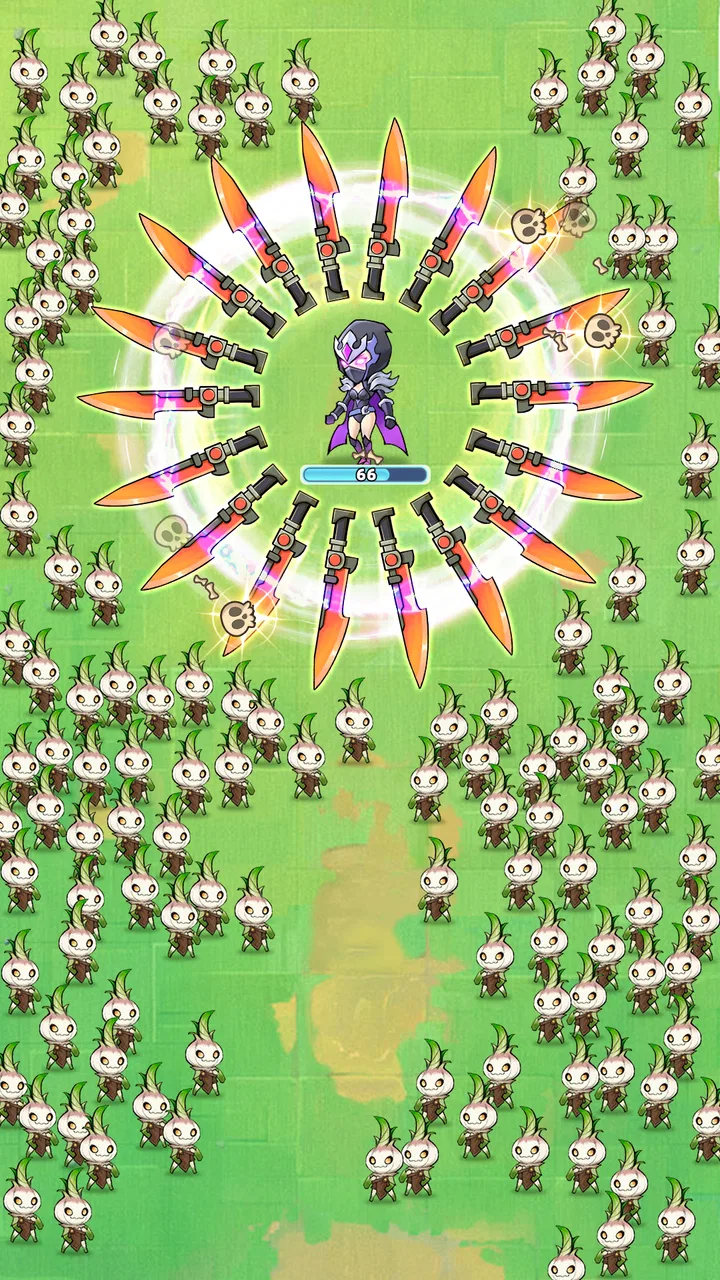
I can understand the appeal of Hero Clash within a few minutes: it is a casual idle RPG from Glaciers Game that aims to make progress feel easy to pick up and easy to leave. I tested it with short breaks in mind rather than treating it like a game that demands a long evening. That distinction matters. Its best moments come when I want a little character-building, a few decisions, and a sense that my team is moving forward without asking for my full attention.
The game is free to download and rated Everyone 10+, so it sits comfortably in the broad, accessible part of the mobile RPG market. It has reached over five million installs, with an average rating of 4.1 from around twenty thousand ratings. Those figures suggest a sizeable audience, but they do not tell you whether its rhythm suits your habits. For me, the real question is simpler: does it deliver a satisfying few minutes when I am waiting, commuting, or winding down?
Why the first few minutes work
The opening experience is built around the familiar appeal of an idle role-playing game: assemble a group, improve its strength, and watch progress continue with relatively little manual effort. I like that basic promise when I am not in the mood for a demanding action game. There is no need to learn a complicated control scheme before getting started, and the casual presentation makes the first session feel approachable rather than intimidating.
You May Also Like

 Google Keep - Notes and lists
Google Keep’s Quiet Growth Shows the Appeal of Simpler Notes
As mobile work gets busier, Google Keep keeps winning a simple contest: capture a thought quickly, find it later, and get on with the day.

 Blood Strike: 2.5 Anniversary
Blood Strike’s Loadouts Turn Every Drop Into a Tactical Gamble
A close look at Blood Strike’s custom loadouts: how fast access to signature weapons reshapes its battle royale rhythm, rewards preparation, and narrows the gap between fights.

 Pandora - Music & Podcasts
Pandora’s Music Is Easy to Start, but Harder to Recover
Pandora’s strength is its low-effort path from a seed to a station. Its weak spot is how much confidence it asks you to place in connection, setup, and quiet recovery.

 8 Ball Pool
 Is Built on Rivalries, Rematches, and Routine
A close look at the rivalries, rematches, shared routines, and unanswered safety questions that turn a quick pool match into a persistent mobile community.

 Samsung Music
’s Quiet Strength Is Playing What You Already Own
Its reach comes less from spectacle than from dependable access to a personal library. That simplicity is both the app’s strongest retention engine and its ceiling.

 AccuWeather: Weather Radar
AccuWeather Review: A Quick, Clear Forecast for Everyday Decisions
For everyday plans, the best forecast is the one you can understand quickly. AccuWeather makes rain timing, radar, and local conditions easy to act on, with a few trade-offs.
More From Our News Desk



That accessibility is also the first limitation. Players who want precise movement, fast reactions, or a large amount of direct control may find Hero Clash too hands-off. The pleasure is not in personally controlling every attack. It is in making choices around development and seeing whether those choices make the next stretch smoother. If you expect a compact action RPG, it is better to adjust that expectation before spending time with it.
My most useful early habit was resisting the urge to improve everything immediately. In an idle RPG, resources can disappear quickly when every available upgrade looks tempting. I found it more sensible to focus on the characters or improvements that directly helped my current group instead of spreading attention across every option. That approach makes the game easier to read and prevents the early menus from turning into a series of automatic taps.
The short description calls it “Hero Clash,” but the more meaningful identity is its combination of casual pacing and RPG progression. The game is not trying to replace a long-form console adventure. It is better understood as a lightweight routine: open it, check what has changed, make a few decisions, and leave. That makes the initial hook less about story immersion and more about the small satisfaction of returning to a stronger team.
A useful game for awkward gaps in the day
I found the format particularly suitable for moments when I have enough time to play but not enough focus for something demanding. A short wait at a café, a break between tasks, or the last few minutes before bed can all work. The game gives those gaps a shape: collect progress, inspect the current obstacle, adjust the team, and try again.
A realistic example is a lunch break. I can open Hero Clash, see whether my group has reached a point where an upgrade is worthwhile, spend a few minutes testing progress, and close it before the break ends. I do not need to remember a complicated plot or rebuild my mental context from scratch. That low re-entry cost is one of its strongest qualities.
However, I would not choose it for every break. If I have only a few seconds, the opening and checking routine may feel like work rather than entertainment. The game is most comfortable when I have enough time to make at least one meaningful decision. Its short-session strength is not instant action; it is low-pressure progress with a small amount of attention.
How the session rhythm feels
The rhythm is built around alternating attention and waiting. I make a choice, allow progress to develop, then return to see whether the result is enough to move forward. That pattern can be relaxing because it removes the pressure to perform constantly. At the same time, it means the game’s immediate pleasure depends heavily on whether the next decision feels meaningful.
When an upgrade clearly changes my ability to advance, the loop works well. I can identify a problem, improve the team, and feel that the next attempt has a purpose. When the result is less obvious, the experience becomes more mechanical. I may still collect rewards and tap through improvements, but the session feels closer to maintenance than play.
This is where Hero Clash differs from more active casual games. A puzzle game can give me a complete challenge in a minute. An arcade game can make every second interactive. Here, the satisfaction is spread across several visits. The game is stronger for players who enjoy watching a plan develop than for players who need a clear win or loss before closing the app.
I also recommend treating each visit as a small check-in rather than trying to force a long session. The idle structure loses some of its charm when I sit down expecting constant excitement. A better routine is to decide what I want from the visit: strengthen the main group, test a new arrangement, or simply collect and leave. That simple intention keeps the menus from becoming a blur of upgrades.
Where the decision-making has value
The most interesting choices are not necessarily the largest upgrades. Sometimes the better decision is choosing where not to spend. If the next obstacle looks manageable, saving resources for a more important improvement can be more satisfying than buying the first available increase. This gives the game a modest layer of planning, even though it remains accessible.
Another useful approach is to separate experimentation from routine progress. On one visit, I can keep the reliable setup that is already working. On another, I can try a different arrangement or development path and accept that it may be less efficient. That separation makes experimentation feel safer. It also gives repeated visits a purpose beyond collecting the same rewards.
Players should also remember that idle progress can create a false sense of momentum. A stronger number is not always the same as a more enjoyable team or a better decision. I paid more attention to whether an improvement solved a current problem than to whether it simply made the total look larger. That mindset makes the game feel less like a checklist.
Free access and spending pressure
Hero Clash is free, which makes it easy to try without committing money at the beginning. In-app purchases range from $0.99 to $99.99 per item, so the spending scale is wide. I would approach that range carefully, especially because idle games can make progress feel slower immediately after a period of rapid early advancement.
My advice is to decide on a personal boundary before buying anything. If you enjoy the planning and the gradual return loop, spending is not required to understand the game’s appeal. If you start feeling that every pause in progress is a reason to purchase, the experience has changed from relaxing entertainment into pressure. That is the point where I would close the shop and ask whether the underlying loop is still enjoyable.
This also affects who should skip it. Players who dislike in-app purchase systems on principle may be happier with a paid casual game that offers a fixed experience. Likewise, anyone who wants a completely uninterrupted adventure may prefer a game with fewer progression prompts. Hero Clash is easier to recommend to someone comfortable with free-to-play design and willing to play at their own pace.
Returning after a pause
The strongest part of the idle format is how forgiving it feels when I leave. I do not have to protect a long streak of concentration or remember the exact details of a battle. Returning is mostly about checking what accumulated and deciding what deserves attention. That makes the game suitable for people whose phone time is scattered across the day.
Still, “easy to return to” does not mean “always rewarding to return to.” The first check-in after a pause usually has more energy because there is something to collect or evaluate. Later visits can become predictable if I follow the same sequence without changing my goals. I found that the game stays fresher when I alternate between efficient progress and occasional experimentation instead of repeating one routine forever.
For a busy player, I would suggest using a two-step return. First, collect and inspect rather than spending immediately. Second, ask which single improvement will make the next session more interesting or more effective. This prevents the common idle-game habit of opening the app, tapping every highlighted button, and leaving without understanding what changed.
The game also works well as a background hobby rather than a primary game. I can give it attention when I want a small task, but I do not need to organize my entire day around it. That flexibility is valuable for casual players. It is less valuable for people who want every session to feel distinct, because the same forgiving structure can eventually feel familiar.
How much replay value is really there?
Hero Clash’s replay value comes from continued progression and the possibility of making different choices, not from a completely new experience every time I open it. That is an important distinction. If you enjoy optimizing a group, comparing improvements, and seeing how far a setup can go, the loop can remain appealing for a while. If you need fresh mechanics or a changing challenge in every session, the repetition may wear thin sooner.
I noticed that replay value depends on creating small personal objectives. “Get stronger” is too vague and quickly becomes repetitive. “Improve the weakest part of the group,” “save for a specific upgrade,” or “test whether a different setup handles the next obstacle” gives a session a clearer reason to exist. These goals do not transform the game, but they make its existing systems more engaging.
There is also a trade-off between efficiency and curiosity. The most efficient route may be comfortable, but it can reduce the feeling of discovery. Trying something less familiar may slow progress, yet it gives me a reason to pay closer attention. I would not experiment every time, but occasional detours help prevent the idle loop from becoming pure administration.
Compared with a standard puzzle game, Hero Clash offers more long-term character development but less instant variety. Compared with an action RPG, it asks for far less concentration but gives me less direct influence over individual moments. Compared with other idle RPGs, its main appeal is not that it eliminates repetition; it is that it packages repetition into a gentle routine that can fit around ordinary life.
Who will enjoy it, and who will not
I would recommend Hero Clash to someone who likes RPG growth but does not always have time for active combat. It suits players who enjoy checking a team, making gradual improvements, and returning later to see the result. It is also a good fit for people who want a casual game that can sit alongside a busy schedule instead of demanding a dedicated session.
I would be more cautious recommending it to someone who wants a strong narrative, expressive controls, or a constant stream of new challenges. The idle structure naturally places more weight on waiting and repetition. Even when the progression is satisfying, it does not provide the same immediate involvement as a hands-on battle system.
The age rating of Everyone 10+ makes it broadly approachable, but the purchase range is still worth keeping in mind for families. I would set spending expectations clearly before handing the game to a younger player. The free entry point is convenient, yet the presence of optional purchases means the most comfortable experience comes from knowing how you want to handle them.
Glaciers Game has kept the premise focused enough for casual use, and the current version is 1.0.127. On Android, the minimum requirement is version 7.0 or newer, which makes it accessible to many older devices. I would still judge the experience by how comfortably it runs on a particular phone, especially if the device is already struggling with other games, rather than assuming that a low minimum system requirement guarantees perfect performance everywhere.
My casual verdict
After spending time with Hero Clash, I see it as a pleasant short-session companion rather than a game I would play continuously for hours. Its immediate pleasure comes from easy re-entry, low-pressure progress, and the small decisions that shape a developing group. When I have a few spare minutes and want something more involved than a passive distraction, it gives me enough to do without demanding full concentration.
Its weaknesses are closely tied to those strengths. The same idle structure that makes it interruption-friendly can also make it repetitive. The same simple progression that welcomes new players can feel limited to people seeking deep control. And the free-to-play model, with purchases from $0.99 to $99.99 per item, requires a little discipline if the relaxed pace starts to feel artificially slow.
My practical recommendation is to play it in short, intentional visits. Do not rush to spend every resource, do not treat every highlighted upgrade as mandatory, and give yourself occasional reasons to experiment. Those habits make the game clearer and help reveal whether you enjoy its actual loop rather than simply reacting to its prompts.
Hero Clash is at its best when you want progress that can survive interruptions. I would recommend it to casual RPG fans who enjoy gradual improvement and do not mind repetition. I would skip it in favor of a puzzle, arcade, or more active role-playing game if I wanted immediate challenge, constant variety, or complete control. For the right player, though, it is an easygoing free game that turns scattered minutes into a simple, repeatable hobby.
FAQs for Hero Clash
01What is Hero Clash and how does it work?
Hero Clash is a strategic role-playing game available on both Android and iOS platforms. Players can collect and upgrade heroes, participate in battles, and engage in various missions. The game involves strategic planning, where players must choose the right heroes and skills to defeat opponents. It offers both solo and multiplayer modes.
02Are there in-app purchases in Hero Clash?
Yes, Hero Clash includes in-app purchases. Players can buy in-game currency, special items, and hero upgrades to enhance their gameplay experience. While the game can be played without spending money, purchases can speed up progress and provide additional resources. Always monitor spending, especially if children are playing.
03What are the system requirements for Hero Clash?
For Android users, Hero Clash requires Android version 5.0 or higher, with at least 2GB of RAM for optimal performance. iOS users need iOS 11 or later. The game is designed to run smoothly on mid-range to high-end devices, but older devices might experience some lag or reduced graphics quality.
04Is an internet connection required to play Hero Clash?
An internet connection is necessary to play Hero Clash, as it frequently updates game data and allows players to participate in real-time multiplayer battles. While some aspects of the game can be enjoyed offline, such as solo missions, the full experience involves interacting with other players online.
05How can I ensure my progress is saved in Hero Clash?
To save your progress in Hero Clash, it's recommended to connect your game account to a social media platform or the game’s cloud service. This not only secures your data but also allows you to recover your progress if you switch devices or reinstall the game. Always ensure your account is linked properly.
Pros
- Engaging storyline with rich characters.
- Smooth graphics and animations.
- Frequent updates with new content.
- User-friendly interface and controls.
- Diverse character customization options.
Cons
- Requires constant internet connection.
- In-app purchases can be pricey.
- Battery drains quickly during play.
- Occasional lag on older devices.
- Limited offline gameplay options.

Hero Clash
Gallery